Biophilic Design: Bringing Nature into Built Spaces | SR Greenscapes |
Modern buildings are becoming increasingly sophisticated, yet many people spend most of their daily lives surrounded by concrete, glass, artificial lighting and mechanical systems, with limited contact with nature. Biophilic design offers a different approach: instead of treating nature as decoration added after construction, it integrates natural elements, processes and experiences into the planning and design of built environments.
At SR GREENSCAPES PVT. LTD., we view biophilic design as an opportunity to create spaces where architecture, landscape and natural systems work together. A thoughtfully designed landscape can do more than enhance visual appeal- it can influence how people experience a space, support biodiversity, improve environmental performance and contribute to healthier, more resilient built environments.
What Is Biophilic Design?
Biophilic design is an approach to the planning and design of buildings and landscapes that strengthens people's connection with nature. The concept is associated with the broader idea of biophilia, which describes the human tendency to seek connections with living systems and the natural world.
In practical landscape design, biophilic principles can be expressed through vegetation, trees, water, natural materials, daylight, natural forms, sensory experiences, biodiversity and views of nature. However, successful biophilic design is not simply about placing more plants around a building.
It is about understanding the site and creating meaningful relationships between people, plants, water, climate, soil, architecture and ecological processes.
Why Is Biophilic Design Becoming Important?
Rapid urbanisation has transformed the relationship between people and natural environments. Increasingly dense development can reduce access to vegetation, natural soil, biodiversity and open spaces. At the same time, buildings and paved surfaces can contribute to heat accumulation, stormwater runoff and fragmented habitats.
Biophilic design provides a framework for responding to some of these challenges at the scale of buildings, campuses, residential developments, workplaces, institutions, hospitality spaces and public landscapes.
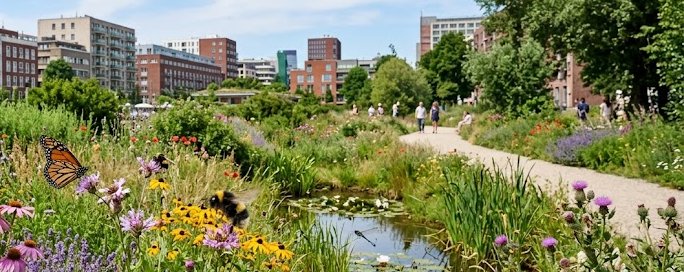
A well-planned green space can provide shade, create visual relief, support pollinators, improve the experience of outdoor areas and contribute to more environmentally responsive site planning.
The objective is not to recreate wilderness inside a building. Rather, it is to introduce functional and meaningful connections with natural systems into everyday environments.
Biophilic Design Is More Than Adding Plants
One of the most common misconceptions is that biophilic design simply means adding indoor plants, vertical gardens or decorative planters.
Plants are certainly important, but they represent only one component.
A genuinely biophilic landscape considers factors such as site orientation, sunlight, wind, soil, water availability, vegetation structure, seasonal change, biodiversity, human movement and sensory experience.
For example, a tree positioned according to the site's solar exposure may provide shade while also creating a comfortable outdoor environment. A rain garden can transform stormwater management into an attractive landscape feature. Native and climate-appropriate plants can create habitat while reducing unnecessary resource requirements.
The result is a landscape that performs ecological and functional roles while remaining visually engaging.
The Core Elements of Biophilic Landscape Design
- Direct Connection with Nature
The most obvious expression of biophilic design is direct contact with living natural elements.
Trees, shrubs, lawns, groundcovers, climbers, flowering plants, water bodies and natural materials can introduce different layers of nature into a built environment. Planting should be selected according to the site's ecological conditions rather than purely for appearance.
A combination of canopy trees, understory plants, shrubs and groundcovers can create a more natural vegetation structure than isolated ornamental plants.
- Natural Light and Views of Greenery
Human experience of a space can be strongly influenced by daylight and visual access to nature.
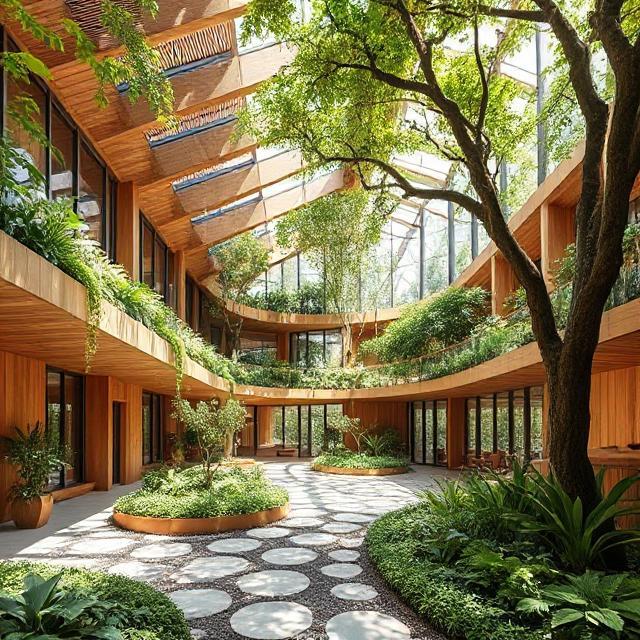
Landscape design can therefore work together with architectural planning to frame views toward trees, gardens, courtyards, water features or planted terraces. Indoor spaces can benefit from carefully positioned windows, atriums, courtyards and green views.
The landscape should not simply surround the building; it can become part of the visual experience of the building itself.
- Water as a Design Element
Water introduces movement, sound, reflection and visual variation into a landscape.
Biophilic water features may include ponds, streams, reflective pools, rain gardens, bioswales and other water-sensitive landscape interventions.
Importantly, sustainable water design should consider the complete water cycle. Rainwater can potentially be captured, infiltrated, stored or reused rather than being treated only as runoff.
This creates an important connection between aesthetic landscape design and environmental performance.
- Natural Materials and Textures
Stone, timber, natural aggregates, clay, bamboo and other natural or nature-inspired materials can introduce texture and visual warmth into built environments.
Material selection should consider durability, maintenance, local availability and environmental implications. Combining natural materials with vegetation can soften hard architectural forms and create transitions between built and natural spaces.
- Biodiversity and Habitat
Biophilic landscapes can also function as small-scale ecological networks.
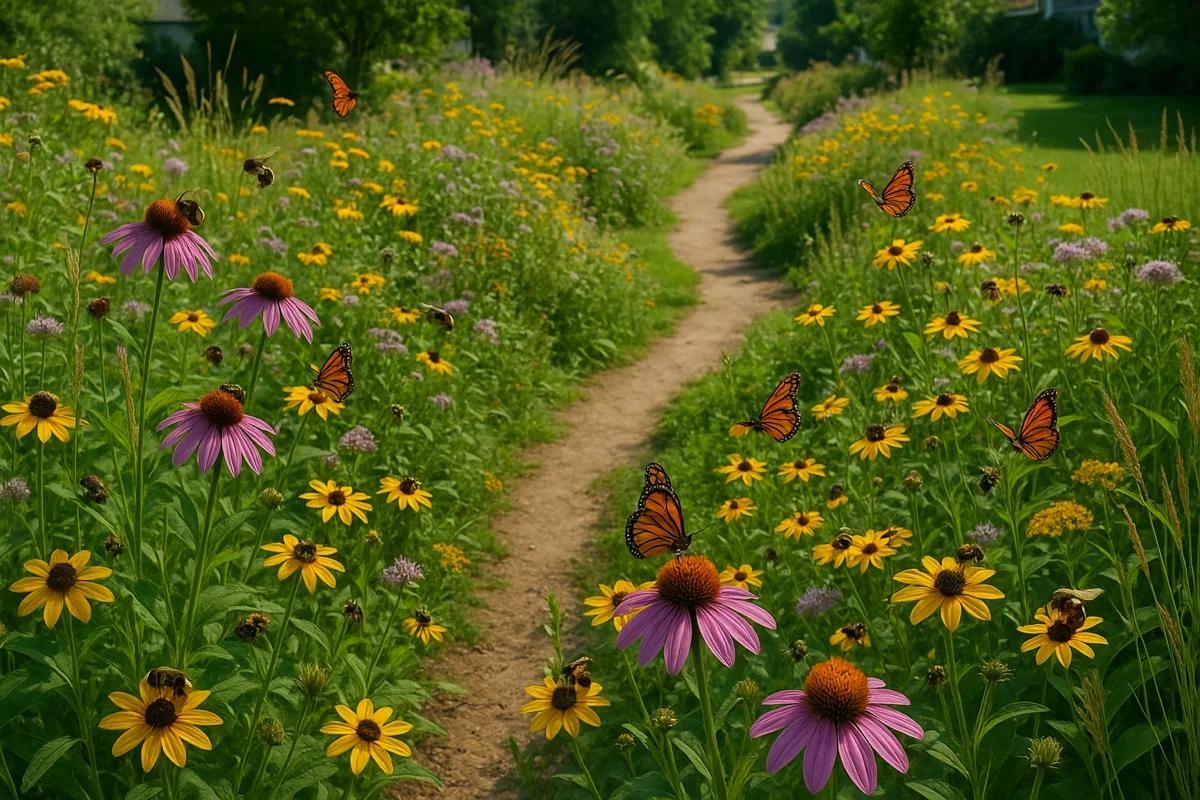
Planting a diversity of species can provide resources for butterflies, bees, birds and other organisms. Flowering plants can provide nectar and pollen, while fruiting and shelter-producing plants can contribute to habitat value.
Instead of designing landscapes exclusively around human aesthetics, biodiversity-oriented planting asks an additional question:
How can this landscape support other forms of life?
This approach can transform ordinary gardens into functioning ecological spaces.
- Sensory Experiences
Nature is experienced through more than sight.
A successful biophilic landscape can engage multiple senses through the fragrance of plants, the texture of foliage, the sound of water, the movement of leaves, seasonal flowers and the presence of birds and pollinators.
Aromatic plants can be incorporated into wellness gardens. Texturally diverse foliage can create tactile experiences. Water movement can introduce natural sound.
These details can make a landscape more immersive and memorable.
- Natural Forms and Patterns
Nature rarely consists entirely of rigid geometric forms. Curves, branching patterns, layered vegetation, repetition, variation and organic textures can be incorporated into landscape compositions.
This does not mean every biophilic landscape must look wild or informal. Formal landscapes can also incorporate natural patterns through planting structure, material selection, water movement and visual framing.
The key is to create design relationships inspired by natural systems rather than relying exclusively on artificial uniformity.
- Seasonal Change
One of nature's most valuable characteristics is that it changes over time.
Flowering periods, new foliage, fruiting, leaf colour, seasonal water levels and changing light conditions can give a landscape a dynamic identity.
A landscape designed with seasonal succession in mind can remain visually interesting throughout the year rather than depending on a single period of peak flowering.
This requires thoughtful species selection and an understanding of plant growth cycles.
Biophilic Design and Sustainable Landscaping
Biophilic design and sustainable landscape design can complement each other, but they are not identical concepts.
Sustainable landscaping focuses strongly on responsible use of resources, ecological performance, resilience and long-term environmental considerations. Biophilic design places particular emphasis on strengthening people's relationship with nature.
When combined thoughtfully, they can produce landscapes that are both environmentally responsible and human-centred.
For example, a landscape can combine climate-appropriate plants, efficient irrigation, healthy soil, rainwater management and biodiversity planting while also creating attractive views, shaded spaces and sensory experiences.
The Importance of Plant Selection
Plant selection is one of the most important decisions in any biophilic landscape.
The right plant cannot be selected solely because it looks attractive in a catalogue or photograph. Its performance depends on the relationship between the plant and the site.
At SR GREENSCAPES, plant selection can consider factors such as:
Local climate and microclimate
Sunlight availability
Soil characteristics
Drainage conditions
Water availability
Mature plant size
Root behaviour
Maintenance requirements
Seasonal characteristics
Ecological value
Landscape function
Compatibility with surrounding plants
A scientific approach to plant selection can reduce avoidable failures and help landscapes perform better over time.
Designing with Trees: The Living Infrastructure of a Landscape
Trees are among the most valuable components of a biophilic landscape.
They can provide shade, structure, habitat and seasonal interest while contributing to the visual identity of a site. Their placement can influence pedestrian comfort, outdoor usability and the relationship between buildings and open spaces.
However, tree selection and positioning require long-term thinking.
A tree that appears appropriate when newly planted may eventually interfere with buildings, utilities, pathways or infrastructure if its mature size is ignored.
Therefore, biophilic tree planning should consider mature canopy spread, root development, height, wind exposure, soil volume, water availability and proximity to structures.
Biophilic Design in Residential Landscapes
Residential landscapes provide an excellent opportunity to bring nature into everyday life.
A villa garden, apartment courtyard or terrace can incorporate shaded planting, edible gardens, sensory plants, biodiversity pockets, small water features, vertical greenery and outdoor spaces for relaxation.
Even a relatively small garden can be designed as a layered ecosystem rather than a collection of individual ornamental plants.
The objective is to create spaces that people can see, use, experience and interact with throughout the day.
Biophilic Design for Corporate and Workplace Spaces
Workplaces can benefit from integrating nature into both indoor and outdoor environments.
Courtyards, entrance landscapes, shaded seating gardens, green terraces, indoor planting, breakout gardens and visual connections to vegetation can transform otherwise hard and highly built environments.
A corporate landscape can also communicate organisational values. Sustainability, biodiversity and responsible resource management can become visible parts of the workplace environment rather than remaining abstract statements.
Biophilic Design for Hotels and Hospitality Spaces
Hospitality landscapes influence the experience of guests from the moment they arrive.
Entrance planting, courtyards, poolside landscapes, tropical gardens, sensory gardens, rooftop spaces and carefully framed views can create distinctive environments.
For hospitality projects, biophilic design can be particularly valuable because the landscape becomes part of the guest experience and the identity of the property.
Biophilic Design for Schools and Institutions
Educational landscapes can serve both ecological and learning functions.
A school garden can incorporate native plants, butterfly gardens, medicinal plants, sensory planting, biodiversity zones, edible landscapes and interpretation elements.
Such spaces can transform landscape areas into informal learning environments where students can observe plant growth, pollination, seasonal changes, soil organisms and ecological relationships.
A landscape can therefore become not just a background to education, but part of the educational environment itself.
Biophilic Design for Urban Spaces
Urban landscapes face unique challenges, including limited space, heat, soil compaction, pollution, water constraints and intensive human use.
Biophilic interventions can range from street trees and pocket parks to green roofs, vertical gardens, urban biodiversity corridors and courtyard planting.
The scale may vary, but the principle remains the same: integrate nature into the places where people already live, work and move.
In cities, even small interventions can contribute to a larger network of green spaces when they are planned as connected systems.
From Greenery to Green Infrastructure
A modern landscape should not be viewed only as decoration.
Trees can provide shade. Vegetation can support habitat. Soil can store and infiltrate water. Rain gardens can manage runoff. Green roofs can introduce vegetation where ground space is limited.
This way of thinking shifts landscape design from ornamental planting to functional green infrastructure.
At SR GREENSCAPES, this perspective can be applied by integrating landscape aesthetics with site-specific environmental functions wherever appropriate.
The Role of Soil in Biophilic Landscapes
Healthy soil is the foundation of a healthy landscape.
Soil provides physical support, water, air and nutrients for plant roots while also supporting complex biological communities.
Before planting, factors such as soil texture, drainage, compaction, organic matter and fertility should be considered.
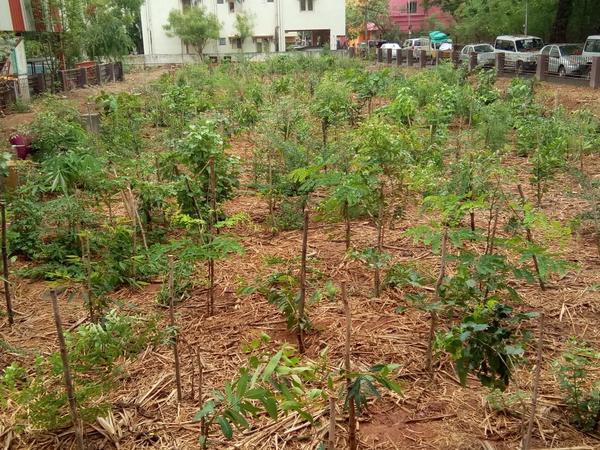
Simply adding plants to poor or compacted soil can result in weak establishment and increased maintenance requirements.
Therefore, a successful biophilic landscape begins below ground as much as it does above ground.
Water-Sensitive Biophilic Design
Water is one of the most important resources in landscape planning.
A water-sensitive landscape attempts to understand where rainfall goes after it reaches the site. Instead of rapidly directing all runoff away, landscape interventions can be designed to encourage infiltration, temporary storage, controlled movement and appropriate reuse where feasible.
Rain gardens, bioswales, permeable surfaces, infiltration areas, rainwater harvesting and efficient irrigation can be considered as part of an integrated water strategy.
This creates landscapes that respond to water rather than simply consume it.
Designing for Pollinators and Urban Biodiversity
A biophilic landscape can become a refuge for biodiversity.
Butterflies, bees and other pollinators require appropriate food resources and suitable habitat. Birds may benefit from food-producing plants, shelter and water sources.
Plant diversity is therefore an important consideration.
A butterfly garden, for example, should not be designed solely around visually attractive flowers. It should consider nectar resources, host plants, flowering succession, shelter and pesticide-conscious management.
Such landscapes demonstrate how beauty and biodiversity can coexist.
Biophilic Design and Human Experience
A landscape is ultimately experienced by people.
The design should therefore consider how users move through and interact with the space. A shaded pathway creates a different experience from an exposed paved route. A garden with fragrance and seasonal flowers creates a different sensory experience from a purely hardscape environment.
Biophilic design can incorporate moments of discovery, enclosure, openness, movement, refuge and connection.
The most effective landscapes often encourage people to slow down, observe and interact with their surroundings.
Why Professional Biophilic Landscape Planning Matters
Successful biophilic design requires more than selecting attractive plants.
It involves understanding the site, identifying opportunities and constraints, developing a coherent design concept and selecting appropriate materials, plants and systems.
Poorly planned green spaces can lead to excessive maintenance, inappropriate plant growth, irrigation problems, drainage issues and premature landscape deterioration.
Professional planning helps connect the different components into one integrated system—from soil and plants to irrigation, drainage, lighting, hardscape and long-term maintenance.
Our Approach at SR GREENSCAPES
At SR GREENSCAPES PVT. LTD., our approach to landscape development begins with understanding the site.
We consider the relationship between soil, sunlight, water, climate, vegetation, architecture and human use before developing landscape solutions.
Our landscape planning process can include:
Site Assessment → Research & Analysis → Concept Development → Landscape Design → Plant & Material Selection → Detailed Proposal → Execution → Handover
Depending on project requirements, solutions may include residential landscapes, institutional landscapes, corporate environments, biodiversity gardens, terrace gardens, vertical landscapes, wellness gardens, water-sensitive landscapes and other nature-integrated spaces.
Our objective is simple:
To create landscapes that perform—not merely landscapes that look beautiful.
Designing Landscapes That Perform, Sustain and Inspire
The future of landscape design lies in moving beyond the traditional distinction between architecture and nature.
Buildings and landscapes can work together. Gardens can provide habitat. Trees can provide shade. Soil can support water infiltration. Plants can create sensory experiences. Water can become both an ecological resource and a design element.
Biophilic design provides a framework for bringing these relationships together.
A successful landscape is therefore not simply a collection of plants around a building. It is a carefully considered living system—one that evolves with time and creates meaningful connections between people and nature.
Let Nature Become Part of Your Next Project
Whether you are planning a villa, residential community, corporate campus, school, institution, hospitality property, commercial development, terrace or urban landscape, biophilic principles can be integrated according to the site's specific requirements.
At SR GREENSCAPES PVT. LTD., we combine landscape design, horticultural knowledge and sustainability-focused thinking to develop nature-integrated outdoor environments.
Science-Driven Sustainable Landscapes
Designing Landscapes That Perform, Sustain, and Inspire.
Planning a New Landscape?
Talk to our landscape team about your site requirements, landscape development, planting strategy, biodiversity features or sustainable landscape solutions.
SR GREENSCAPES PVT. LTD.
Based in Bengaluru | Pan-India Project Execution
📞 +91 9845728507
🌐 www.srgreenscapes.com
📧 info@srgreenscapes.com
Book Your FREE Landscape Consultation.